
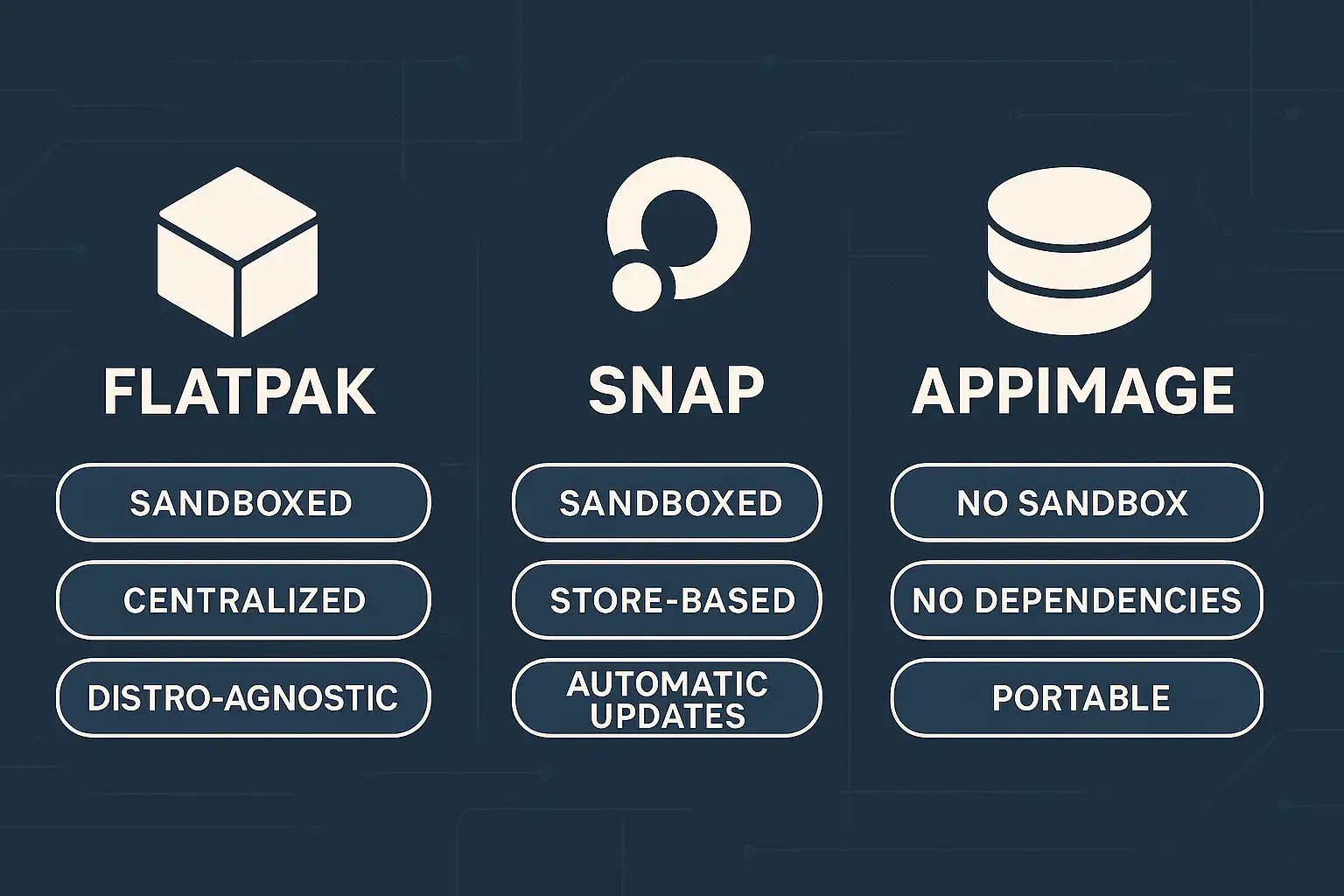
Flatpak, Snap and AppImage are ways to distribute desktop applications across Linux environments. They can reduce dependence on one distribution's package version, but they differ in update flow, sandbox integration and how applications interact with the host.
Compare the operational differences
Flatpak applications commonly use runtimes and portals to access selected host resources. Snap packages use their own confinement and update model, with behavior depending on the interface and system configuration. AppImage packages are commonly distributed as downloadable executable files and may not provide the same centralized installation or update experience by default.
These are broad tendencies, not a verdict about every package. Review the publisher, source, permissions, update mechanism and required integrations for the specific application. A sandbox can reduce some access while still granting sensitive permissions needed by the program.
Think about updates and trust
For each format, ask how updates arrive, whether you can verify the publisher and how quickly security fixes reach users. Installing an application from a convenient format does not make an unknown publisher trustworthy. Prefer the project's documented distribution channel or your organization's approved repository.
Desktop integration matters too: file pickers, themes, hardware devices and removable storage may behave differently. Test the workflow the user actually needs rather than judging only by whether the application window opens.
Choose per application
A distribution's native package may integrate best with system libraries and management policy. A sandboxed format may be useful for a desktop app that needs a newer release. A portable image can help with a one-off trial but needs an update and verification plan.
Keep a short inventory of where important applications came from and who maintains them. That is more useful than declaring one package format universally safest. If you need a strong isolation boundary, use a design that has been evaluated for that threat model rather than relying on the package extension alone.
Related Articles
Find Linux Directory Sizes with du and ncdu
Comments (0)
Leave a Comment
Sponsors



Apps

